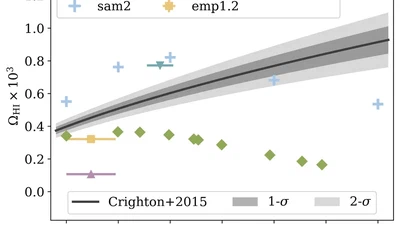
HI Simulations for Cosmology with the SKA Observatory
tommaso-ronconi
(he/him)
Fixed-Term Researcher · HPC Expert
INAF – Institute of Radioastronomy (Italian ALMA Regional Center)
PhD in Astrophysics & Cosmology
2016-11-07
2020-10-06
SISSA — International School for Advanced Studies, Trieste
Master in High Performance Computing (MHPC)
2018-09-15
2019-12-20
ICTP / SISSA, Trieste
MSc in Astrophysics & Cosmology
Università di Bologna (DiFA)
BSc in Astronomy
Università di Bologna (DiFA)
I work at the intersection of extragalactic astrophysics, large-scale-structure cosmology, and scientific software engineering. My research targets the next generation of cosmological surveys (SKAO in the radio and Euclid in the optical/near-infrared) where the questions and the datasets are large enough that the modelling and the software are inseparable problems.
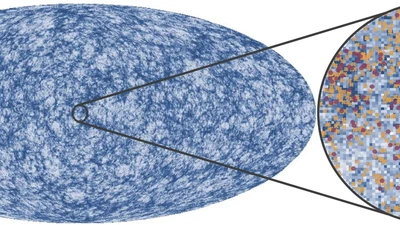
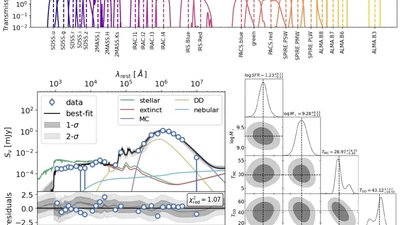
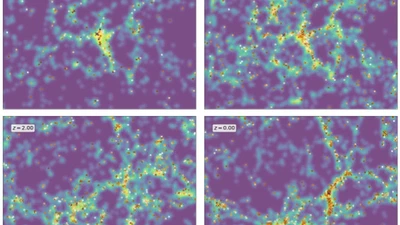
Three threads run through my work. The first is galaxy formation and evolution through panchromatic spectral-energy-distribution modelling, combining physically motivated models with Bayesian inference to recover galaxy properties from multi-band data. The second is mock skies: building full-sky, multi-population light-cones that let survey teams test pipelines and forecast constraints before the real data arrive. The third, running underneath both, is high-performance scientific software — the C++/Python tools, HPC workflows, and open-source packages that make the science reproducible and fast.
I currently lead the science-platform prototyping work package for ESO’s ALMA support-centre ALMASPACE development plan, and I contribute to the SKAO Cosmology Science Working Group. I’m always glad to talk about survey simulations, SED modelling, or research software — feel free to get in touch.